
Bird Houses and Nesting Boxes in Colorado Springs
Adding a bird house can give cavity-nesting birds another place to raise their young while bringing the fascinating nesting season closer to home.
Wild Birds Unlimited of Colorado Springs carries functional bird houses, nesting boxes, mounting poles, predator guards, nesting accessories, and camera-equipped bird houses designed to support nesting birds. Our local team can help you match the right house to the birds, habitat, and conditions around your property.
Visit us at 2450 Montebello Square Drive, and feel free to bring photographs or measurements of the location where you would like to install your bird house; we would love to help you set up the right house for your property!
Bird House Questions: Quick Answers
What birds use bird houses in Colorado Springs?
Bird houses are used primarily by cavity-nesting birds, including several bluebirds, wrens, chickadees, nuthatches, swallows, and woodpeckers found around Colorado Springs. The right species will depend on the box, habitat, and elevation.
Do hummingbirds use bird houses?
No, Hummingbirds do not use traditional bird houses. They build small open-cup nests on branches and other protected supports.
When should I put up a bird house?
Installing a bird house before nesting season gives birds time to find and investigate it. However, a functional nesting box can be installed at any time of year, and some birds may use it for shelter outside the breeding season.
Does a bird house need a perch?
No. Cavity-nesting birds do not need an exterior perch. A perch can make it easier for predators or larger competing birds to reach the entrance.
Why is my bird house still empty?
Birds may need time to discover a new house. Entrance size, mounting height, surrounding habitat, sun exposure, wind, predators, and competition can also affect whether a box is used. The house may simply not match the cavity-nesting birds living around your property.
Birds That Use Bird Houses
Bird houses are used primarily by cavity-nesting birds. Some species, including woodpeckers, can excavate their own cavities, while secondary cavity nesters rely on natural tree cavities, abandoned woodpecker holes, or appropriately designed nesting boxes.
Colorado birds that may use bird houses or specialized nesting structures include:
- Mountain, Western, and Eastern Bluebirds
- House Wrens
- Black-capped and Mountain Chickadees
- White-breasted, Red-breasted, and Pygmy Nuthatches
- Tree and Violet-green Swallows
- Northern Flickers
- American Kestrels
- Western Screech-Owls
The species attracted to a nest box will depend on its dimensions, entrance size, placement, elevation, and surrounding habitat.
Bird houses are only one part of the nesting story. Colorado birds also nest on the ground, in deciduous and coniferous trees, on ledges, in shrubs, and on human-made structures. Read our Wild Bird Warble article, Where Colorado Birds Like to Nest: A Look at Their Favorite Homes, to explore the many nesting strategies used by birds across Colorado.
What Makes a Good Bird House?
A bird house should do more than look attractive. A functional nesting box must protect eggs, nestlings, and attending adults from weather while providing appropriate ventilation and drainage.
Important bird house features include:
- An entrance opening sized for the intended species
- Adequate ventilation near the top of the box
- Drainage in the floor
- Durable, weather-resistant construction
- Sufficient interior space for the intended bird
- A roof that helps shed rain and shade the entrance
- Interior texture or a fledgling ladder below the opening
- Access for monitoring and seasonal cleaning
- A secure mounting system
- No exterior perch
If the exterior is painted or finished, choose a bird-appropriate product and a light, muted color that will not absorb excessive heat. Never paint the inside of a nesting box or the surface immediately surrounding the entrance.
Choosing the Right Bird House
There is no single bird house that is appropriate for every species or yard. A successful nesting setup begins with the right house placed in the right habitat.
Before selecting a nesting box, consider:
- Which cavity-nesting birds live near your property
- Whether your yard is open, wooded or somewhere in between
- The size of the entrance opening
- The recommended mounting height
- Exposure to wind and intense afternoon sun
- Nearby trees, shrubs, fences and structures
- Access for monitoring and cleaning
- Predators or competing wildlife
- Whether the box can be mounted securely
- The distance between nearby nest boxes
The entrance size is especially important. An opening that is too small may exclude the intended bird, while one that is too large may allow predators or larger competing birds to enter.
Where Should a Bird House Face?
In Colorado Springs, an east- or southeast-facing entrance often provides some morning sun while reducing exposure to intense afternoon heat. The entrance should also face away from prevailing wind, driving rain, and severe weather whenever possible.
A south-facing house may work in a protected or shaded location, but a box exposed to full afternoon sun can become dangerously warm. West-facing entrances and walls generally receive the strongest afternoon sunlight and should be avoided when a cooler location is available.
Should a Bird House Be Mounted on a Tree or Pole?
A freestanding metal pole often provides the greatest flexibility. It can be placed in suitable habitat and equipped with a predator guard.
Trees and fence posts may give squirrels, raccoons, cats, and other predators easier access to the box. They can also make it more difficult to install an effective baffle.
Not every property can accommodate a freestanding pole, so our team can help you compare mounting systems and predator-resistant options.
Protecting a Bird House From Predators
A poorly placed nesting box can make eggs and nestlings particularly easy for predators to find.
Predator-resistant strategies may include:
- Mounting the box on a freestanding pole
- Installing an appropriately designed pole baffle
- Adding an entrance-hole guard or extender
- Keeping the entrance away from nearby branches and structures
- Avoiding exterior perches
- Using sturdy construction that cannot be easily opened
- Monitoring the box responsibly
No predator guard is effective in every setting. The right approach depends on the house, mounting system, and wildlife around your property.
Visit our wildlife-resistant bird-feeding guide for more information about squirrels, raccoons, deer, and other backyard visitors.
Should Bird Houses Be Placed Near Feeders?
No, a bird house should not be placed directly beside a busy bird feeder.
Many nesting birds feed their young insects and other natural foods, even when the adults visit feeders themselves. Native plants, healthy insect populations, clean water, and nearby shelter can all help create better nesting habitat.
A feeding station may also create crowding and attract squirrels, raccoons, outdoor cats, and predatory birds. Placing the nesting box some distance from your busiest feeders may give the nesting pair a quieter location.
You can still support nesting adults with appropriate bird food elsewhere in the yard. Our bird seed guide explains which foods attract chickadees, nuthatches, woodpeckers, bluebirds, and other local birds.
Types of Bird Houses
Bluebird Houses
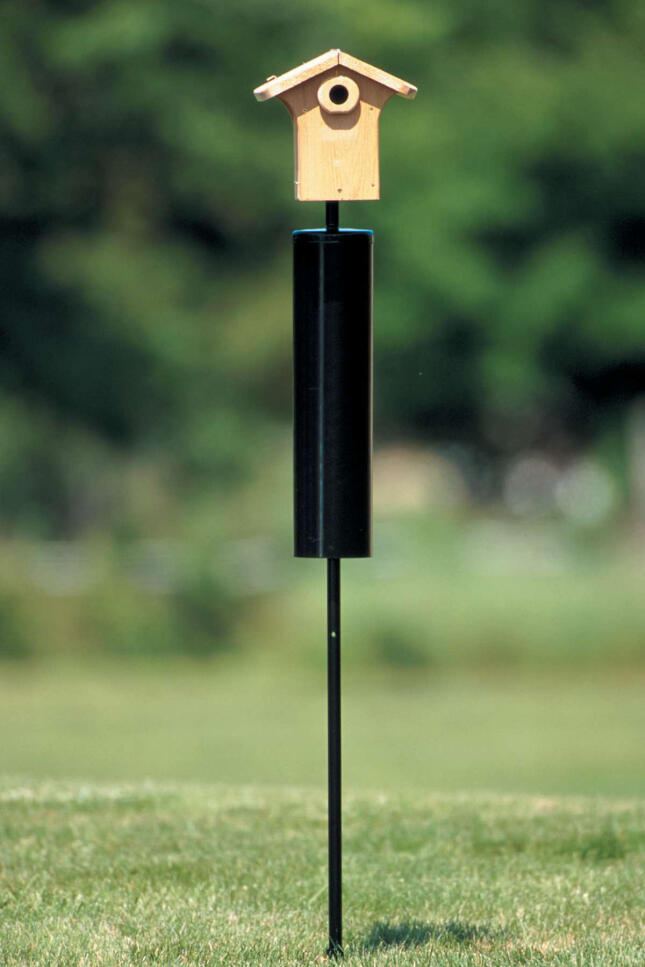
Bluebird houses are designed for bluebirds and other similarly sized cavity nesters. Bluebirds generally prefer open habitat with low vegetation and scattered trees, fence lines, or perching locations nearby.
Depending on your location and elevation, Colorado bluebird species may include Mountain Bluebirds, Western Bluebirds, and, in parts of eastern Colorado, Eastern Bluebirds.
Bluebird boxes are usually most successful when mounted on a freestanding pole in appropriate open habitat with suitable predator protection.
Wren and Chickadee Houses
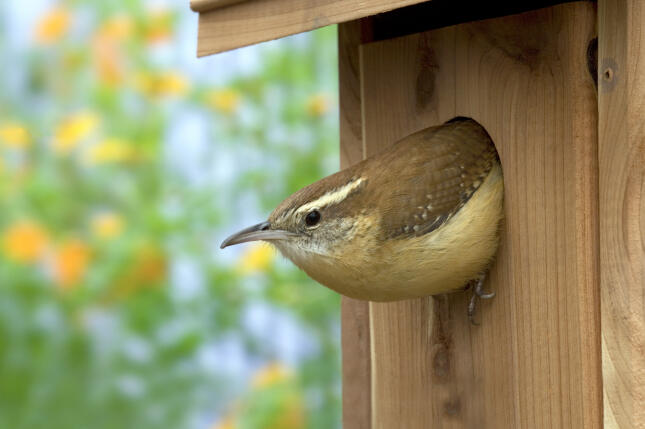
House Wrens, Black-capped Chickadees, and Mountain Chickadees may use smaller nesting boxes placed near trees, shrubs, woodland edges or established gardens.
Although some houses can accommodate more than one small cavity-nesting species, placement and habitat will influence which bird ultimately claims the box.
Wrens can be enthusiastic nest builders and may fill more than one available cavity with sticks. Chickadees may add moss, soft plant fibers, and other materials to create their nest.
Nuthatch Houses
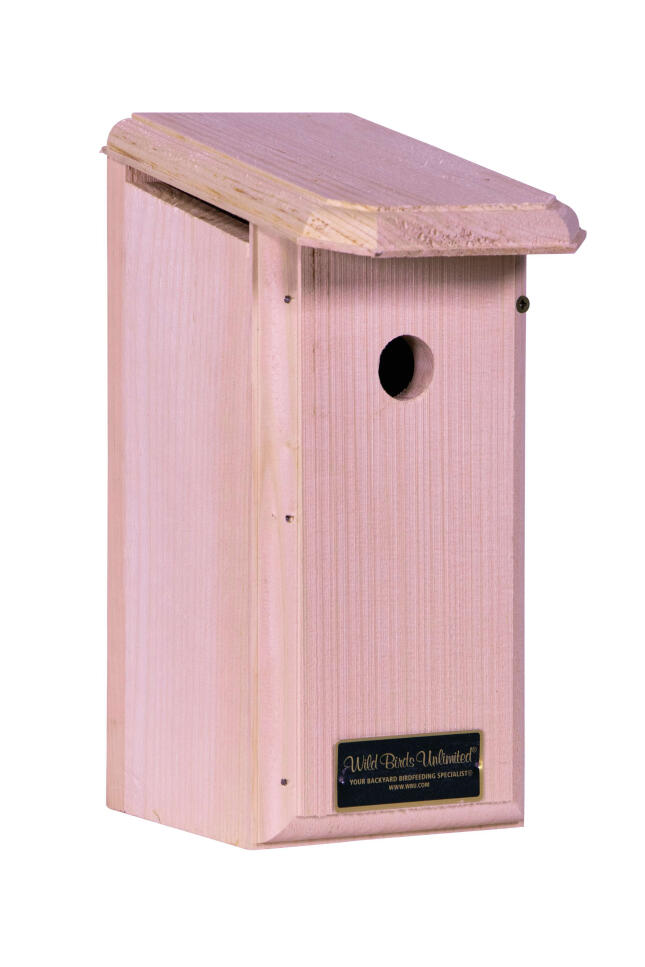
Several nuthatch species found in the Colorado Springs region use natural cavities and may accept an appropriately sized nesting box.
Nuthatches generally prefer boxes near mature trees or wooded habitat. The appropriate entrance size, mounting height, and surrounding habitat will vary by species, so correct identification and placement are important.
Swallow Houses
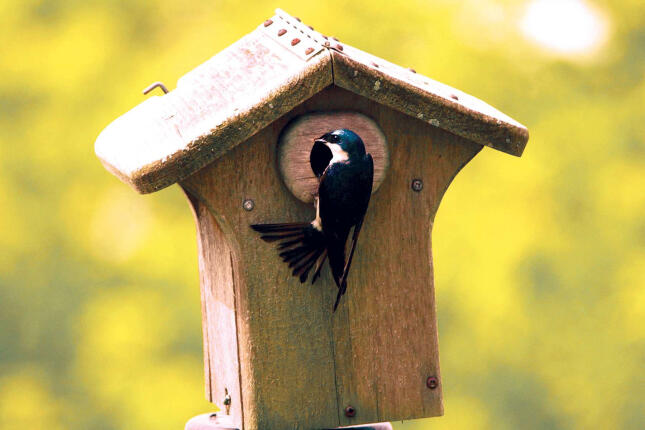
Tree Swallows and Violet-green Swallows may use nesting boxes in suitable open habitat. They need clear flight paths and access to abundant flying insects.
Swallow boxes should be placed according to the needs of the intended species rather than simply attached wherever space is available.
Northern Flicker Houses
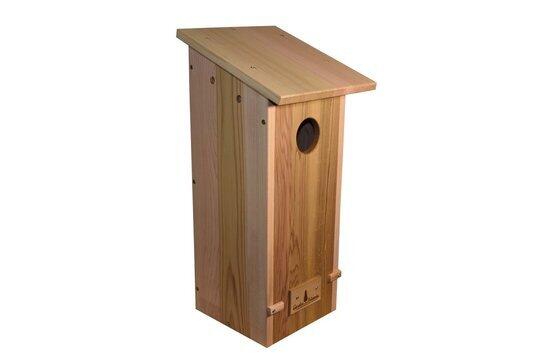
Northern Flickers are cavity-nesting woodpeckers that sometimes excavate nesting holes in siding, trim, or other wooden parts of a home. Providing a properly designed Northern Flicker house can offer them a safer and more appropriate place to nest.
If a flicker has already started excavating a hole in your home, placing a suitable nest box directly over the existing hole may encourage the bird to use the box instead of continuing to drill into the house or beginning another hole nearby.
Flicker houses are larger than standard songbird houses and should include the correct entrance size, interior dimensions, ventilation, drainage, and wood-chip bedding.
No nest box can guarantee that a flicker will stop drilling, but the right house and placement can greatly improve your chances. Our team can help you select a Northern Flicker house and determine the best placement for your property.
Nesting Shelves
Some birds that do not use enclosed houses may accept a protected nesting shelf. Robins, House Finches, Phoebes, and certain other species sometimes build nests on ledges or sheltered structures.
A nesting shelf should be placed where birds have a suitable approach, overhead protection, and some shelter from severe weather.
Smart and Camera Bird Houses
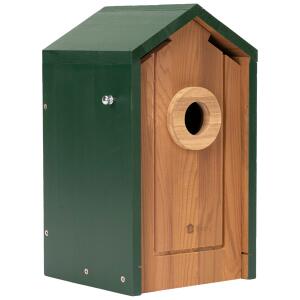
A camera-equipped bird house can provide a remarkable view of nest building, egg laying and nestling development.
Choose a house specifically designed to accommodate the camera safely. The camera and wiring should not reduce ventilation, create sharp edges, obstruct the birds or make the house easier for predators to access.
Complete the installation and test the camera before nesting begins. Once birds are actively nesting, avoid unnecessary changes to the house or camera.
Bird Houses During Bear Season
In Colorado Springs, bird houses can provide another way to enjoy backyard birds when seed, suet or nectar feeders need to be removed because of bear activity.
A nest box does not contain a food reward for a bear. Native plants, clean water, and appropriately placed nesting habitat can help you remain connected to birds while reducing food-based attractants.
If bears are visiting your property, follow our guide to bird feeders and bears in Colorado Springs.
Helping Birds Discover a New Bird House
A bird house may be occupied quickly, or it may remain empty for an entire nesting season. Local bird populations, habitat, placement, competition, and the availability of natural cavities all influence how quickly birds accept a new box.
Do not be discouraged if birds do not move in immediately. Confirm that the house and entrance are appropriate for local species, then give the birds time to investigate it.
Some cavity-nesting birds may also investigate or use boxes for shelter outside the breeding season.
Nesting Material
Birds are remarkably capable of finding their own nesting materials. Leaving some natural materials in your landscape can help:
- Dry grasses
- Small twigs
- Moss
- Fallen leaves
- Plant fibers
- Mud
- Spider silk
- Naturally shed feathers
Avoid offering dryer lint, long hair, yarn, string, plastic strips, or other materials that can become wrapped around a bird’s feet, wings, or neck. Pet hair may contain residues from flea, tick, or other topical treatments and is not a good choice for nesting birds.
If you offer a nesting-material product, use one made specifically for wild birds and follow its directions.
Most small songbird boxes should be left empty so birds can construct their own nests. Some larger cavity nesters require a layer of untreated wood shavings because they do not build a typical nest. Follow the recommendations for the intended species.
Cleaning and Maintaining Bird Houses
Choose a bird house that opens easily for cleaning and inspection.
Never clean, relocate or modify a box while it contains an active nest, eggs or dependent young. Most native bird nests are protected by federal law while they are active.
At the end of the nesting season:
- Confirm that the box is no longer active.
- Remove old nesting material.
- Scrape away accumulated debris.
- Clean the box according to the manufacturer’s instructions.
- Allow it to dry completely.
- Check the roof, floor, entrance and mounting hardware for damage.
- Repair or replace damaged components before the next nesting season.
Wear gloves and avoid breathing dust from old nesting material. Do not spray pesticides, fragrances, or harsh household chemicals inside a bird house.
Find Bird Houses and Nesting Boxes in Colorado Springs
Visit Wild Birds Unlimited of Colorado Springs at 2450 Montebello Square Drive to explore bird houses, nesting boxes, mounting systems, predator guards, nesting materials, and camera-equipped options.
Tell us which birds live around your property and where you would like to place the house. Photographs of the yard, nearby trees, and proposed installation site can help our team recommend an appropriate option.
You can also shop bird houses and nesting products from our Colorado Springs store online. Your order will be prepared and packed by our local store team.