
Bird Baths, Habitat and Backyard Bird Questions:
Do birds really need a bird bath?
Yes! Water is just as important to birds as food, and providing a reliable source of clean water can attract birds that may never visit a bird feeder.
Birds use water for both drinking and bathing. Bathing helps them maintain their feathers, which is important for insulation, flight, and overall feather condition.
A bird bath can be especially valuable in Colorado's dry climate, where natural sources of clean, accessible water aren't always easy to find.
What kind of bird bath is best?
The best bird bath is one that is shallow, easy to access, and easy to keep clean.
Birds don't need a deep pool of water. A shallow basin gives them a place to drink and bathe while allowing them to feel secure. A textured or gently sloping surface can also provide different depths and better footing.
Where you want to put your bird bath matters too. We carry a variety of bird baths and mounting options for yards, gardens, patios, and decks, and we're happy to help you find something that works for your space.
Where should I put a bird bath?
Choose a location where birds can easily see and access the water while still feeling safe.
Nearby shrubs, trees, or other cover can give birds somewhere to retreat after bathing, but avoid placing a bath where predators can easily hide and ambush visiting birds.
You'll also want to put it somewhere you can easily reach for cleaning and refilling. A beautiful bird bath isn't very useful to the birds if it's so inconvenient that keeping it clean becomes a chore!
How often should I clean my bird bath?
Bird baths should be dumped, rinsed, and refilled with fresh water every day or two, and given a thorough cleaning whenever you see algae, droppings, or other buildup. During hot weather or periods of heavy use, they may need attention even more often.
A copper disk placed in the bird bath can also help slow the growth of algae and some bacteria, making it easier to keep the water fresh between cleanings. It doesn't replace regular cleaning and fresh water, but it can be a helpful addition to your bird-bath routine.
Clean bath + fresh water = healthier birds!
Can I provide water for birds during the winter?
Absolutely! Birds still need water when it's cold, and finding accessible liquid water can become more difficult when natural water sources freeze.
A heated bird bath or bird bath heater can help keep water available during freezing Colorado Springs weather. Heated bird baths aren't meant to make the water warm. They simply help keep it from freezing.
Providing open water in winter can bring some wonderful visitors to your yard, including birds that may not be interested in your feeders.
Will a bird bath attract mosquitoes?
A properly maintained bird bath will not become a mosquito nursery.
Mosquitoes need standing water to complete their development, so regularly dumping, rinsing, and replacing the water interrupts that process. Moving water can also make a bird bath less attractive to mosquitoes while making it more noticeable to birds.
Keeping your bird bath fresh and clean is good for the birds and helps keep mosquitoes from getting established.
How can I attract more birds to my yard?
Think beyond the feeder!
A bird-friendly backyard provides the basic things birds need to survive: food, water, shelter, and places to raise their young.
Feeders and bird baths can supplement those resources, but your landscaping matters too. Trees, shrubs, grasses, flowers, and other plants can provide natural food, nesting sites, protection from weather, and places to hide from predators.
The more layers and resources your yard provides, the more useful it can become to birds and other wildlife.
Are native plants good for birds?
Yes! Native plants can be one of the best additions you can make to a bird-friendly yard.
Plants that are native to our region can provide seeds, berries, nectar, shelter, and nesting habitat. Just as importantly, native plants support insects, including the caterpillars and other invertebrates that many birds rely on for food.
Even a small amount of native habitat can help. You don't have to completely redesign your yard. Adding a few native flowers, grasses, shrubs, or other plants can begin providing additional resources for birds and pollinators.
Do birds need insects even if I feed them?
Yes! Bird feeders supplement natural food sources, but they don't replace a healthy habitat.
Many birds rely heavily on insects, particularly during nesting season when growing nestlings need protein-rich food. Even birds we think of as seed eaters may feed insects to their young.
Creating habitat that supports insects, especially native insects, is another way to support the birds visiting your yard.
Should I use pesticides if I want a bird-friendly yard?
If your goal is to create habitat for birds, reducing or avoiding pesticide (and herbicide) use whenever possible is a great place to start.
A bird-friendly yard doesn't have to be perfectly manicured or insect-free. Sometimes a few chewed leaves are a sign that your backyard ecosystem is doing exactly what it's supposed to do.
Do you sell bird houses, and will birds actually use them?
Yes! But not every bird uses a bird house.
Bird houses are designed primarily for cavity-nesting birds, and different species have different requirements for entrance-hole size, interior dimensions, placement, and habitat.
Other birds build open nests and won't use an enclosed bird house at all. Some of those may use nesting shelves or platforms instead; we can help with those options as well!
Choosing a house based on the birds you hope to attract is much more effective than simply choosing one because it looks cute. We're happy to help you find the right option and talk about where to place it.
How can I prevent birds from hitting my windows?
Windows can be dangerous for birds because reflections of sky, trees, and other habitat can make glass look like a clear path to fly through. The good news is that there are ways to make windows more visible to birds and reduce collisions.
For window treatments to work well, they should create a visible pattern across the outside surface of the glass, rather than relying on a single decal in the middle of a large window.
We carry several bird-friendly window solutions, including Window Gems, reusable prismatic window clings that help break up reflections while creating beautiful rainbows indoors, and Flock Blocker, a reusable template that makes it easy to create an effective dot pattern across your windows.
If you aren't sure what solution will work best for your windows, take a photo and bring it in. We're happy to help you figure out how to make your windows safer for birds while still preserving your view!
How can I make my backyard safer for birds?
Creating a bird-friendly yard isn't only about attracting birds. It's also about reducing some of the hazards they face.
Keeping feeders and bird baths clean, preventing window collisions, keeping cats indoors or otherwise safely contained, reducing pesticide use, providing appropriate cover, and maintaining healthy feeding areas can all make a difference.
You don't have to do everything at once. Small changes add up, and we're always happy to help you find practical ways to make your yard safer and more welcoming for birds.
What birds might I see in my Colorado Springs backyard?
One of the best things about backyard birding in Colorado Springs is the variety!
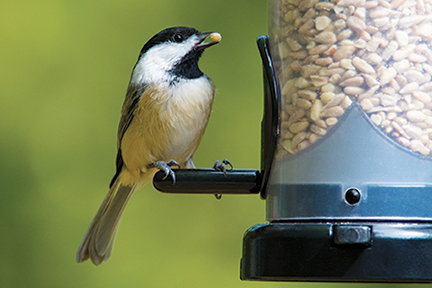
Depending on your neighborhood, habitat, elevation, and time of year, backyard visitors can include House Finches, Black-capped Chickadees, Mountain Chickadees, American Goldfinches, Pine Siskins, Dark-eyed Juncos, White-breasted and Red-breasted Nuthatches, Pygmy Nuthatches, Northern Flickers, Downy Woodpeckers, Mourning Doves, American Robins, jays, sparrows, hummingbirds, and Cooper's Hawks, among many others!
Migration can bring completely different visitors through the area in spring and fall, while some species are much more noticeable during winter or summer.
Part of the fun is that you never know exactly what might show up next!