
Managing Pigeons, Starlings and Other Large Feeder Birds
Bird feeders can become busy places. Sometimes a large flock arrives and seems to take over every perch, empty the feeder, scatter food, and temporarily push smaller birds aside.
These visitors are often called “bully birds,” although they are not being deliberately mean. They are simply using the food source they have discovered and relying on natural behaviors that help them compete and survive.
The goal does not have to be removing them from your yard entirely. A few changes to your food, feeders, and feeding-station design can reduce crowding and give smaller birds more opportunities to eat.

Quick Answers About Large Feeder Birds
How can I keep pigeons away from my bird feeders?
Reduce food on the ground, avoid blends with millet, stay away from large open platforms, use feeders with short perches or cages, and place food for smaller birds where pigeons cannot comfortably land.
What feeders help discourage starlings and grackles?
Caged feeders, weight-sensitive feeders, short-perch feeders, and some upside-down suet feeders can limit access by heavier or less-acrobatic birds.
Will safflower keep unwanted birds away?
Safflower can be less appealing to some pigeons, starlings, grackles, and squirrels while still attracting chickadees, finches, nuthatches, and other birds. Results vary, so it may take some experimentation.
Will the smaller birds leave if a large flock arrives?
Usually not for long. Chickadees, finches, nuthatches, and other small birds often wait in nearby trees or shrubs and return when the larger flock moves along.
Pigeons: Our Most Common Complaint

Rock Pigeons are often the biggest year-round feeder challenge in Colorado Springs. They are highly adaptable, comfortable around people, and very good at finding reliable food.
Pigeons have lived alongside humans for thousands of years. Domestic pigeons descended from wild Rock Pigeons, and birds were brought to North America from Europe in the early 1600s. Today, they nest on buildings, bridges, barns, ledges, and other structures that resemble their ancestral cliff habitat.
Pigeons prefer feeding on the ground or standing on broad, stable surfaces. They may gather beneath feeders where shells and seed accumulate, then move onto platform feeders or large trays.
Ways to Reduce Pigeon Activity
- Clean spilled food from beneath feeders.
- Choose high-quality foods with fewer unwanted seeds and shells.
- Avoid seed blends with millet, which are designed to attract ground-feeding birds.
- Remove or reduce large feeder trays that provide easy landing space.
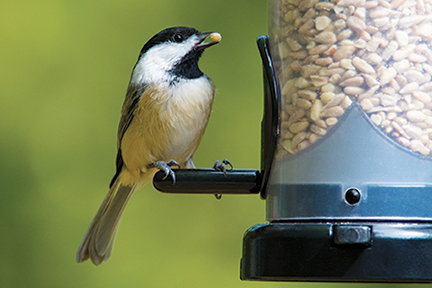
- Use tube feeders with short perches.
- Add a cage around feeders.
- Consider weight-sensitive feeders that close when a heavier bird lands.
- Feed smaller portions so large flocks cannot remain at an unlimited food source.
- Temporarily pause feeding if pigeon numbers become overwhelming.
Pigeons may continue checking the area for a while after changes are made. Consistency matters. If spilled seed or an open tray remains available elsewhere in the yard, they still have a reason to stay.
European Starlings

European Starlings are intelligent, social, and remarkably adaptable. They were introduced to North America during the nineteenth century, with a lasting population becoming established after releases in New York City in the late 1800s.
They can arrive in noisy groups and are especially fond of suet, mealworms, peanuts, and other protein-rich foods. They also compete for nesting cavities, including birdhouses intended for native cavity-nesting birds.
Still, starlings are fascinating birds. Their winter plumage is covered with pale spots, while their feathers appear dark and iridescent as those tips wear away. They are also talented mimics capable of learning the sounds of other bird species.
Ways to Reduce Starling Activity
- Place feeders inside cages that admit smaller birds.
- Try short-perch or clinging feeders that are more difficult for starlings to use.
- Use upside-down suet feeders for woodpeckers and other clinging birds.
- Avoid loose mealworms when large starling flocks are present.
- Offer safflower in place of foods that starlings strongly prefer.
- Reduce the amount of food available at one time.
- Use properly designed nest boxes and monitor them during nesting season.
No feeder is guaranteed to exclude every starling. Combining feeder design with less-preferred foods is usually more effective than relying on one solution alone.
Grackles and Red-Winged Blackbirds

Grackles and Red-winged Blackbirds are native birds, even when their large flocks make a feeder feel chaotic.
Common Grackles are striking birds with iridescent plumage, long tails, and bright eyes. They often forage on the ground and may gather with other blackbirds and starlings, especially outside the breeding season.
Red-winged Blackbirds are actually one of my favorite birds. The males’ brilliant red-and-yellow shoulder patches, the females’ beautifully streaked plumage, and their unmistakable calls are all part of the character of Colorado’s wetlands and open spaces.
During fall and winter, Red-winged Blackbirds may form large mixed flocks with grackles, cowbirds, and starlings. These gatherings can contain an astonishing number of birds.
If blackbirds begin overwhelming your feeders, try:
- Caged or weight-sensitive feeders
- Feeders with smaller perches
- Safflower or foods selected for smaller birds
- Reduced tray space
- A separate ground or platform station placed away from the small-bird feeders
- Limited portions rather than a constantly overflowing food source
If you create a separate station, only offer an amount the birds can finish promptly. Excess grain on the ground can attract rodents and other wildlife.
Magpies, Jays and Other Corvids

Black-billed Magpies, crows, and jays are native birds that belong to the corvid family. They are clever, curious birds capable of solving problems and remembering dependable sources of food.
Some people love their personalities, while others would prefer that they not empty the peanut feeder in a single visit. Black-billed Magpies may visit platform and suet feeders, where their size can make it difficult for smaller birds to feed at the same time.
To limit corvid access:
- Place feeders inside cages.
- Use weight-sensitive feeders.
- Choose short perches instead of open trays.
- Offer peanuts and other large foods only in controlled portions.
- Create a separate station for jays, magpies, or squirrels away from your smaller feeders.
- Feed larger birds at a consistent time rather than leaving unlimited food available.
A separate station can work especially well for customers who enjoy corvids but want to protect the food intended for chickadees, finches, and nuthatches.
Give Small Birds Their Own Space
One of the most effective approaches is to divide the yard into feeding zones.
A protected small-bird station might include:
- A caged tube feeder
- A weight-sensitive feeder
- A finch feeder
- A small-perch safflower feeder
- A caged or upside-down suet feeder
A second station, positioned farther away, can offer larger or tray feeders with limited portions for pigeons, magpies, jays, grackles, or even squirrels.
This approach does not always reduce the total number of birds, but it can reduce crowding and competition at any single feeder. It also lets you enjoy a wider variety of wildlife while controlling which foods are available to each group.
Large and Loud Does Not Always Mean Lasting
A flock of starlings or blackbirds can arrive loudly and dramatically. In that moment, it may look as though every chickadee, finch, and nuthatch has disappeared.
Watch a little longer.
The small birds frequently move into a nearby tree or shrub and wait. Once the larger birds finish eating or move to another part of the neighborhood, the smaller birds often return. Large flocks are highly visible, but they may occupy the feeder for a much shorter period than it initially appears.
Before changing your entire feeding setup, spend a few days observing:
- What time do the large birds arrive?
- How long do they remain?
- Which food attracts them?
- Which feeders do they use?
- Where do the small birds wait?
- How quickly do smaller birds return?
Those answers can help us recommend a targeted solution instead of unnecessarily excluding every larger bird.
Humane Solutions for a More Peaceful Feeding Station
We recommend managing feeder access rather than harming, trapping, or harassing birds. The most successful solution will depend on which birds are visiting, what food you offer, and the design of your yard.
Project FeederWatch similarly recommends feeders that close under the weight of a large bird or feeders surrounded by wire mesh that allows smaller birds to enter.
At Wild Birds Unlimited of Colorado Springs, we can help you explore the options to manage bully birds. Feel free to bring us a photo of your feeding station or tell us which birds are causing trouble. We will help you find a practical approach that still leaves room to appreciate the many personalities visiting your backyard.
Explore our bird feeders and feeding solutions.