
Bird Baths and Heated Bird Baths in Colorado Springs
Birds need dependable water for drinking, bathing, and maintaining healthy feathers. Here in Colorado Springs, our hot summers, dry climate, freezing winter temperatures, and limited natural water can make a well-maintained bird bath especially valuable.
Wild Birds Unlimited of Colorado Springs carries bird baths, heated bird baths, heaters, fountains, drippers, mounting hardware, and water-care accessories for many different yards and spaces. Visit us at 2450 Montebello Square Drive, and our team can help you choose an option that works for your birds, property, and local conditions.
Bird Bath Questions: Quick Answers
Do birds need water during winter, and will they freeze when bathing in the cold?
Yes. Birds need dependable water throughout the year. No, they will not freeze. A heated bird bath or properly designed bird-bath heater can help keep water available when natural water sources are frozen. Healthy birds are adapted to manage their feathers in cold conditions and encounter open water naturally during winter. Heated bird baths keep water from freezing, but they do not make the water hot or interfere with birds’ natural behavior.
How deep should a bird bath be?
Most backyard birds prefer shallow water approximately one to two inches deep. A gradual change in depth and a textured surface can make the bath safer and easier for birds to use.
Should a bird bath be placed in sun or shade?
Some afternoon shade is helpful during hot weather because it keeps the water cooler and may slow algae growth. Birds should also have a clear view of their surroundings and access to nearby shelter without dense vegetation immediately beside the bath where predators could hide.
How often should I replace bird bath water?
Replace the water daily whenever possible, especially during hot weather or periods of heavy use. Empty and refill the bath immediately if the water contains droppings, feathers, seed debris, algae, cloudiness, or unusual discoloration.
Why Birds Need Water
During the hot and often dry conditions that make up much of our time here in Colorado, you will be doing yourself and your birds a big favor by providing them with a reliable source of water.
Water is important to every bird, including species that may never visit a bird feeder. Offering dependable water is one of the simplest steps you can take to increase the variety of birds visiting your yard.
A bird bath can also add a new dimension to backyard birdwatching. Birds often display entertaining behaviors as they drink, splash, bathe, and preen.
As enjoyable as this activity is for us, bathing serves an important purpose. Birds must keep their feathers in good condition so they can fly, regulate their body temperature, and protect themselves from the weather. Bathing helps remove dirt and debris, while preening allows birds to realign their feathers and distribute protective oils.
Water becomes particularly important during extremely hot weather. Birds do not sweat. Instead, they release excess heat through their respiratory system. As temperatures rise, their respiration rate increases, sometimes causing them to pant. This process increases water loss and makes a dependable drinking source especially valuable.
Water is just as important during winter. Bathing and preening help birds keep their feathers clean and properly aligned, allowing those feathers to trap insulating air and protect them from the cold. A clean bird is a warm bird! Natural water can also be difficult to find when temperatures remain below freezing. Although birds can eat snow, melting it requires valuable body heat and energy. Providing accessible liquid water helps birds stay hydrated without that additional cost.
A bird bath, fountain, dripper, or mister can provide hours of birdwatching enjoyment while meeting a basic need for the birds that share our community.
Choosing the Right Bird Bath
A good bird bath does not need to be elaborate. Birds primarily need water that is shallow, accessible, clean, and placed where they feel comfortable using it.
When choosing a bird bath, consider:
- The birds you commonly see
- Where the bath will be placed
- How easily it can be emptied and cleaned
- Whether it needs to remain usable during winter
- Access to a safe electrical outlet
- The bath’s stability in wind and changing weather
- Whether pets or other wildlife use the area
- The height and mobility needs of the person maintaining it
A bath you can comfortably clean and refill will usually be more useful than one that is difficult to maintain.
Types of Bird Baths
Pedestal Bird Baths
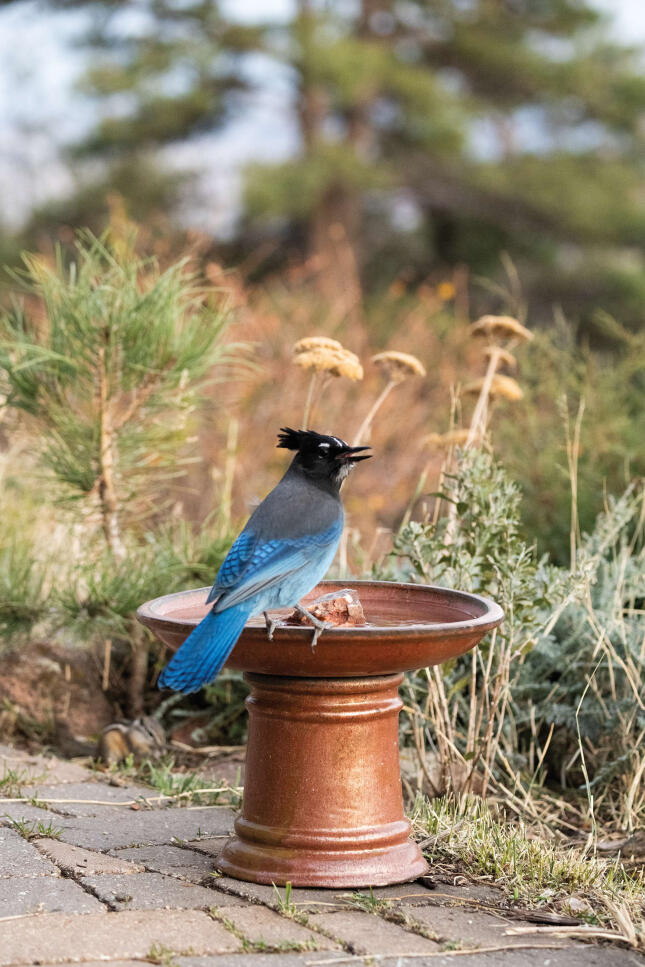
Pedestal baths raise the water above the ground and can serve as an attractive focal point in a garden. They are available in many materials, colors, and styles.
Choose a sturdy base and place it on a level surface. Some pedestal baths can become unstable in strong wind or when larger animals lean against them, so stability should be considered carefully.
Ground-Level Bird Baths
Many birds naturally drink and bathe at ground level. A low bath can look natural among plants, rocks, and garden beds and may be especially inviting to birds that spend much of their time foraging on the ground.
Place ground-level baths where birds have a clear view of their surroundings. If outdoor cats or other predators visit the area, choose a more open location or raise the bath.
Deck-Mounted Bird Baths
Deck-mounted baths are useful for patios, balconies, porches, and smaller spaces. They can also bring visiting birds closer to windows for easier viewing.
Make sure the mounting system is securely attached and that water cannot create a slippery surface or damage the structure beneath it.
Hanging Bird Baths
Hanging baths work well where ground or railing space is limited. They can be suspended from a sturdy hook, branch, or feeding station.
Because they may move in strong wind, hanging baths should be installed where they will remain reasonably stable and can be reached safely for cleaning and refilling.
Heated Bird Baths
A heated bird bath helps keep water available during freezing weather. Some baths have a heating element built into the basin, while others use a removable heater designed for an existing bath.
Heated bird baths are intended to keep water from freezing. They do not create hot water, and birds will not be harmed simply because they bathe during cold weather. Birds already encounter open natural water during winter and continue managing their feathers normally.
Before adding a removable heater, confirm that it is compatible with the bath’s material, size, and water depth. Some materials can crack or become damaged when used with an unsuitable heater. Use only products specifically designed for outdoor bird baths. Follow the manufacturer’s instructions and connect electrical products to a properly installed outdoor GFCI-protected outlet. Keep cords and connections protected from water, snow, chewing animals, and foot traffic.
Never add antifreeze, glycerin, salt, or other chemicals to a bird bath.
Adding Moving Water
Birds can often hear or see moving water more easily than still water. A fountain, dripper, mister, or water wiggler can make a bath more noticeable and may attract birds that do not regularly visit feeders.
Moving water will also reduce mosquito breeding by preventing the surface from remaining completely still. It does not eliminate the need to replace the water and clean the bath.
Available options include:
- Solar or electric fountains
- Drippers
- Misters
- Water wigglers
- Bubblers
- Small recirculating water features
Fountains and pumps require regular cleaning because mineral deposits, algae, feathers, and other debris can interfere with their operation. Colorado Springs has areas with mineral-rich water, so periodic maintenance may be especially important.
Bird Bath Depth and Surface
Most backyard birds prefer shallow water. A depth of approximately one to two inches works well for many species, with a gradual change in depth when possible.
If a basin is too deep or slippery, add a stable stone to provide secure footing. Make sure anything placed in the bath cannot shift, tip, trap a bird, or create a sharp edge.
A textured surface is generally easier for birds to grip than a smooth, steep-sided basin.
Where Should You Place a Bird Bath?
Place your bird bath where birds can see their surroundings and reach nearby shelter. Birds need a place to retreat if they feel threatened, but dense vegetation immediately beside a bath can provide cover for outdoor cats and other predators.
A good location often provides:
- A clear view around the bath
- Trees or shrubs within a short flight
- Some afternoon shade during hot weather
- Reasonable protection from strong wind
- Convenient access for cleaning and refilling
- Distance from areas regularly treated with pesticides or lawn chemicals
Shade can help keep water cooler and slow algae growth. However, avoid placing the bath where large amounts of leaves, seed hulls, or other debris constantly fall into it.
When placing a bath near a window, consider bird-safe window treatments that reduce reflections and help prevent window strikes.
How Often Should You Change Bird Bath Water?
Replace the water every day whenever possible, especially during hot weather or when many birds are using the bath. Empty the old water rather than continually topping it off.
Change the water immediately if you notice:
- Droppings
- Feathers or seed debris
- Cloudiness
- Algae
- A sick bird using the bath
- Any unusual odor or discoloration
Fresh water is healthier for birds and makes the bath more inviting.
Cleaning Your Bird Bath
Regular cleaning helps prevent algae, mineral buildup, and the concentration of organisms that could affect bird health.
To clean a bird bath:
- Empty the old water.
- Remove leaves, feathers, droppings, and other debris.
- Scrub the basin thoroughly with a dedicated brush.
- Rinse it completely.
- Refill it with fresh water.
Keep a brush specifically for bird-bath cleaning and do not use it for dishes, food preparation, or household surfaces.
Some bird baths have finishes or materials that require specific care. Always follow the manufacturer’s instructions, particularly for heated baths, glazed surfaces, concrete, metal, pumps, and electrical components.
Our backyard bird-care guide has additional information about maintaining clean feeders, fresh food, and healthy bird-feeding areas.
Copper Disks and Water-Care Accessories
Copper has natural antimicrobial properties and has long been used in applications involving water. A copper purification disk placed in a bird bath may help slow the growth of algae and some microorganisms, making the bath easier to maintain between cleanings.
Our four-inch Erva Copper Bird Bath Purification Disk is made in the United States from 99.9% pure American copper. Three small feet lift the disk off the bottom of the bath so water can contact more of its surface. Simply place the disk in the basin and keep it submerged.
The copper will naturally darken or tarnish over time. This is normal and does not mean the disk needs to be replaced or has stopped providing its intended benefits.
A copper disk can support good bird-bath care, but it's not a self-cleaning solution. Birds and other wildlife continually introduce feathers, droppings, food, dirt, and other contaminants. Continue replacing the water regularly and scrubbing and rinsing the bath thoroughly.
We can help you select bird-safe water-care products and explain how they should be used. Never add household algae treatments, pool chemicals, pesticides, essential oils, or other unapproved products to water intended for wildlife.
Caring for Bird Baths During Winter
Birds need water throughout the year, including during winter when many natural water sources are frozen.
Before freezing weather arrives:
- Check the bath for cracks or damage
- Follow the manufacturer’s cold-weather instructions
- Remove or protect materials that cannot tolerate freezing
- Clean heaters and electrical components
- Inspect cords for damage
- Confirm that the outlet is suitable for outdoor use
- Keep extension cords and connections protected from moisture
Do not pour boiling water into a frozen bath. Sudden temperature changes can crack some materials.
Even heated baths need regular cleaning and refilling. Evaporation, splashing, snow, and debris can change the water level quickly.
What If a Sick Bird Uses the Bath?
If you notice a sick bird, temporarily remove the bath along with nearby feeders. Clean and disinfect the equipment thoroughly with a 1 part bleach to 10 parts water solution, rinse everything completely, and allow it to dry before returning it to use.
A shared bath can bring many birds into a concentrated area, so taking a temporary break can help birds disperse when illness is present.
Visit our bird health resources for more information about recognizing illness and responding responsibly.
What Birds Might Visit a Bird Bath in Colorado Springs?
Water can attract birds that regularly visit feeders as well as species that primarily eat insects, fruit, or other natural foods.
Depending on your location, habitat, elevation, and the season, visitors may include:
- American Robins
- House Finches
- Lesser and American Goldfinches
- Mountain and Black-capped Chickadees
- Western and Mountain Bluebirds
- Spotted Towhees
- Dark-eyed Juncos
- Northern Flickers
- Nuthatches
- Warblers
- Tanagers
- Hummingbirds
- Migrating thrushes and sparrows
You may be surprised by birds you have never seen at your feeders!
Bird Baths for Hummingbirds
Hummingbirds drink water, but they also enjoy bathing in very shallow water, fine mist, dripping water, and wet leaves.
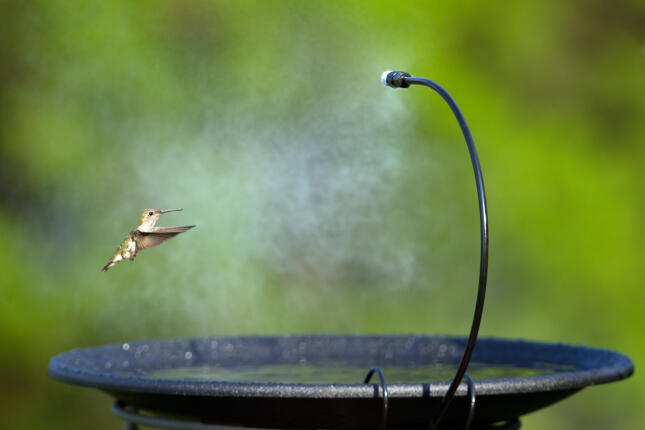
A traditional deep basin may not be their preferred bathing location. Hummingbirds are often attracted to:
- Gentle misters
- Shallow bubbling fountains
- Dripping water
- Wet textured surfaces
- Broad leaves sprayed by a mister
- Shallow fountain edges
Keep the flow gentle and provide safe footing. Pumps, tubing, and reservoirs should be cleaned regularly.
Bird Baths and Mosquitoes
A properly maintained bird bath should not become a mosquito nursery.
Replace the water frequently, scrub the basin, and remove any stagnant water collecting in nearby containers. Moving-water accessories can also help keep the surface in motion.
Do not add pesticides or general mosquito-control chemicals to a bird bath unless the product is specifically approved for that use and used exactly as directed.
Bird Baths in Small Spaces
You do not need a large yard to provide water for birds. A deck-mounted, hanging, tabletop, or compact pedestal bath may work on a balcony, patio, courtyard, or small garden.
Before installing a bath on a balcony or shared property, consider:
- Building or community rules
- Drainage
- The weight of the filled bath
- Secure mounting
- Access for cleaning
- Water dripping onto neighboring spaces
- Window-strike prevention
Our team can help you find a practical option for the space you have.
Find Bird Baths and Heated Bird Baths in Colorado Springs
Visit Wild Birds Unlimited of Colorado Springs at 2450 Montebello Square Drive to explore bird baths, heated bird baths, heaters, fountains, mounting options, and water-care accessories.
Tell us where you would like to place your bath, what type of birds you hope to attract, and how you would prefer to maintain it. Photographs and basic measurements of the area can also help us recommend an appropriate setup.
We are always happy to help you create a dependable source of clean water for the birds and other wildlife that share your yard!