
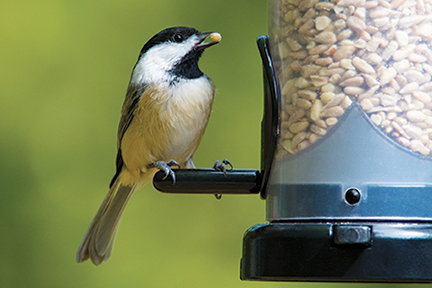
Bird Feeders and Bears in Colorado Springs
Bird Feeders and Bears in Colorado Springs
Bird feeding brings birds, beauty, and joy into our yards, but in Colorado Springs, it also requires an awareness of bears.
Black bears can appear throughout much of our community, including neighborhoods where residents may not expect to see them. Seed, suet, peanuts, and hummingbird nectar can provide a significant food reward. Once a bear successfully finds food, it may return repeatedly.
Responsible bird feeding means preventing bears from accessing food and recognizing when feeders need to come down.
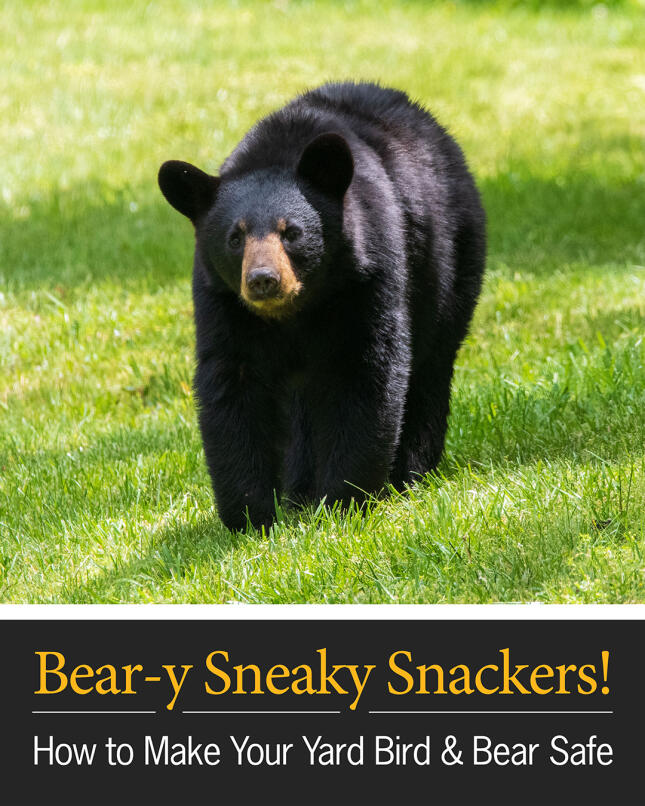
Quick Answers About Bird Feeders and Bears
Do bird feeders attract bears?
Yes. Bears may be attracted to bird seed, suet, peanuts, hummingbird nectar, spilled food, and improperly stored bird food.
When should I remove my feeders?
Remove feeders if a bear reaches or repeatedly investigates your feeding station. Colorado Parks and Wildlife recommends removing bird feeders during the months when bears are active, generally April through November.
How high should a bear-resistant feeder be?
Colorado Parks and Wildlife recommends positioning inaccessible feeders at least 10 feet above the ground and 10 feet from trees or other climbable structures. Additional height provides more protection, especially where snow may accumulate.
Will hot-pepper bird food keep bears away?
It may discourage them, but it cannot guarantee that a bear will stay away. Hot-pepper food should be used only as one part of a larger bear-resistant strategy.
Can I feed birds during winter without worrying about bears?
Often, but continue watching for bear activity. Some bears remain active or delay denning, so the calendar alone does not guarantee that bears are absent.
Is It Legal to Feed Birds in Bear Country?
Feeding songbirds is legal, but intentionally feeding or baiting bears is illegal in Colorado. Leaving bird feeders, garbage, or other attractants accessible to bears may also violate state law or local ordinances.
Colorado Parks and Wildlife recommends removing bird feeders during the months when bears are active. Most Colorado bears are active from approximately mid-March through early November, and CPW specifically recommends removing feeders from April through November.
If a bear reaches a feeder, receives food, or repeatedly visits your feeding station, remove all feeders immediately. Clean up anything that has fallen to the ground and move stored bird food into a secure indoor location.
A food-conditioned bear may lose its natural caution around people, damage property, and become a public-safety concern. Preventing access protects your neighborhood and the bear.
Learn more from Colorado Parks and Wildlife’s Living With Bears resources.
What Attracts Bears to a Yard?
Bears have an extraordinary sense of smell and investigate many potential sources of food. A bear may enter a yard because it smells:
- Garbage or recycling
- Pet food
- Barbecue grills or grease
- Compost
- Ripening or fallen fruit
- Outdoor refrigerators or freezers
- Livestock or chicken feed
- Bird seed, suet, peanuts, or hummingbird nectar
A bird feeder may not be what originally draws a bear into the neighborhood. Once the bear discovers it, however, your yard may become part of its regular search for food, sometimes called a “restaurant route.”
The goal is to keep your home from becoming a reliable stop.
When Should Bird Feeders Come Down?
Remove all accessible seed, suet, and hummingbird feeders if:
- A bear repeatedly investigates your feeding station
- Bears are commonly active in your immediate neighborhood
- Food is accumulating where a bear can reach it
- Feeders cannot be made inaccessible
- A bear begins associating your property with food
- Colorado Parks and Wildlife or local authorities advise feeder removal
If bears are active during the day, taking a break from bird feeding is especially important. Birds will continue finding natural food even though you may miss seeing them at your feeders.
There is no single waiting period that is appropriate for every situation. The objective is to interrupt the bear’s routine and remove any expectation of finding food at your home.
Can a Bird-Feeding Station Be Made Bear-Resistant?
Bear-resistant equipment can significantly limit or prevent a bear’s access to bird food when it is selected, positioned, and installed correctly.
However, bear-resistant does not mean that a bear will never smell the food or investigate the property. Even an inaccessible feeder may attract attention if seed accumulates beneath it or food is stored improperly.
Any bear-resistant system requires:
- Correct installation
- Sufficient height and distance from climbing structures
- Regular inspection
- Careful cleanup beneath feeders
- Secure indoor food storage
- Continued monitoring for bear activity
If a bear continues visiting despite these precautions, the responsible option is to take the feeders down.
Bear-Resistant Winch Pole Systems
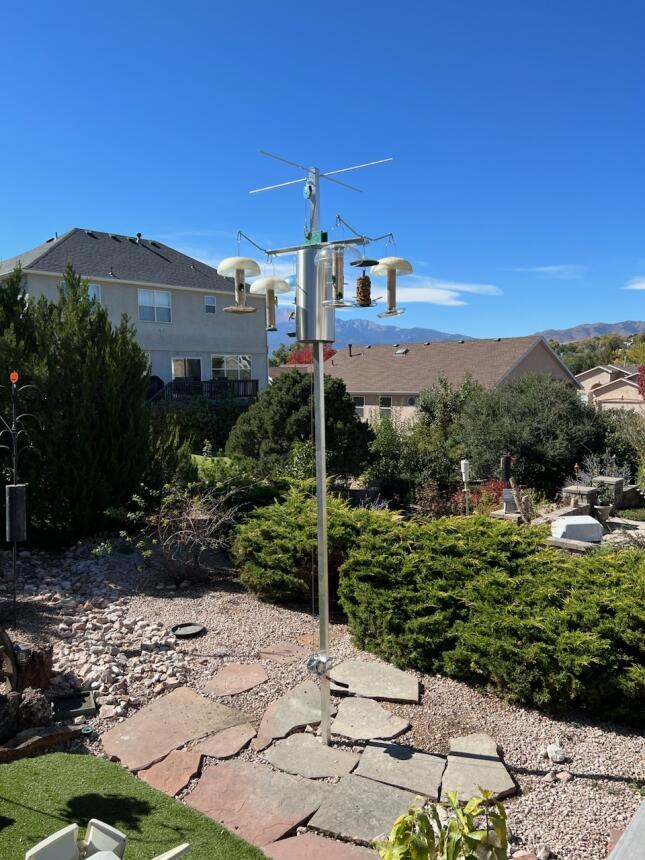
We carry a 14-foot bear-resistant pole system that allows feeders to be raised and lowered using a winch. The feeders can be lowered for filling and maintenance, then raised high enough to remain effectively out of a bear’s reach.
Proper installation is critical. The bottom of every feeder must remain high enough above the ground, including accumulated winter snow, and the system must be positioned away from trees, decks, roofs, and other structures a bear could climb.
A tall pole also needs to be securely installed and strong enough to support the feeders, food, and local weather conditions.
Suspended Feeders and Pulley Systems
Another option is to suspend feeders beyond a bear’s reach using a properly designed wire and pulley system.
Colorado Parks and Wildlife recommends that an inaccessible feeder be positioned at least 10 feet above the ground and 10 feet away from trees or other structures a bear could climb. The Wild Birds Unlimited franchise guidance recommends additional clearance, with the bottoms of feeders approximately 12 to 13 feet above the ground, especially where snow accumulation may reduce the effective height.
Suspended systems must use appropriately rated materials and secure anchor points. They should be installed where lowering, filling, and cleaning the feeders can be done safely.
Heavy-Duty Steel Feeders
Heavy-duty steel feeders with small feeding ports can make it extremely difficult for a bear to access the food, even if the animal reaches the feeder.
Steel construction can withstand more pressure and chewing than lightweight plastic or wood. Small ports also limit the amount of food a bear can obtain.
These feeders provide another layer of resistance, but they should not be treated as a substitute for proper height, placement, and cleanup. A bear may still damage the feeding station or receive food that has fallen to the ground.
Can Hot-Pepper Bird Food Discourage Bears?
Bears are mammals and are sensitive to capsaicin, the compound that makes peppers feel hot. Hot-pepper bird food may discourage bears, squirrels, raccoons, and deer.
However, a bear may still investigate or taste the food before learning to avoid it. Individual animals respond differently, and a hungry or food-conditioned bear may tolerate something unpleasant when natural food is scarce.
Use hot-pepper food as an additional deterrent, not as the only protection between a bear and a food reward. Combine it with inaccessible feeders, secure storage, tidy feeding, and close monitoring.
Never apply bear spray to a feeder or surrounding objects. Bear spray is intended only for emergency personal protection and may become an attractant after it dries.
Handle hot-pepper food carefully. Wash your hands after use, avoid touching your face and eyes, and keep it away from children and pets.
Keep the Area Beneath Feeders Clean
Food on the ground can attract a bear even when the feeder itself is inaccessible.
Tidy feeding options include:
- Sunflower chips
- No-mess seed blends
- Foods without unwanted filler ingredients
- Hot-pepper bird foods
- Trays and seed catchers that are emptied regularly
Inspect the area beneath feeders every day when bears may be active. Remove spilled seed, hulls, dropped suet, broken seed-cylinder pieces, and fermented hummingbird nectar.
Suet and peanuts have strong scents and are especially attractive to bears. Do not offer them from an accessible feeding station when bears are active nearby.
Safflower may discourage some bears, but its hulls can still accumulate beneath a feeder and require frequent cleanup.
Learn about choosing the best bird seed for Colorado Springs birds.
Bring Feeders Inside at Night
Bears are often more active from evening through early morning. Bringing feeders inside each night may reduce the risk when there is general bear activity in the area.
Store feeders in a genuinely secure indoor location. A screened porch, open shed, vehicle, or easily entered garage may not be sufficient.
Nighttime removal reduces risk, but it does not guarantee protection because bears may also be active during the day. If a bear begins visiting during daylight hours, remove the feeders completely.
Store Bird Food Securely
Bird food should be stored indoors in a sturdy, airtight container where a bear cannot reach it.
Do not store bird food:
- On a porch
- Inside a screened enclosure
- In an unsecured shed
- In a vehicle
- Beside an open garage door
- In a container a bear can open or break
A secure container helps control scent and protects food from moisture, insects, and rodents, but the container itself must still be kept somewhere inaccessible to bears.
Manage Other Backyard Attractants
Removing a bird feeder may not solve the problem if other food and scent attractants remain.
Garbage and Recycling
Keep garbage indoors or inside an approved bear-resistant container. Clean garbage and recycling containers regularly to reduce odors, and do not leave food or trash inside a vehicle.
Barbecue Grills
Burn food residue from grills, clean grease traps, and store grills securely when possible.
Pet Food
Feed pets indoors and store their food indoors. Do not leave food bowls outside or on screened porches.
Compost
Use a secure composting system. Avoid adding meat, fish, animal waste, and strongly scented food scraps that may attract bears.
Fruit Trees
Pick fruit as it ripens and remove fallen fruit before it begins rotting on the ground.
Managing the entire property is more effective than focusing only on the bird feeder.
What Should You Do If a Bear Enters Your Yard?
Stay calm and keep your distance. Bring children and pets indoors, and never approach or corner the bear. Make sure it has a clear escape route.
From a secure location, you may make your presence known by yelling, clapping, blowing a whistle, or making other loud noises. Never place yourself between the bear and its exit.
Contact Colorado Parks and Wildlife at 719-227-5200 if a bear repeatedly visits, refuses to leave, damages property, or creates a safety concern.
Call 911 if a bear enters an occupied home or someone is in immediate danger.
Can You Attract Birds Without Feeders?
Yes! If you need to remove feeders, you can still create a yard that welcomes birds.
Consider adding:
- Native flowering plants
- Seed-bearing plants
- Hummingbird-friendly container gardens
- Trees and shrubs that provide natural food
- Nest boxes appropriate for local birds
- A small brush pile where suitable
- Shelter and natural cover
Bird baths and water features provide valuable water for birds and other backyard wildlife. If a bear begins to behave aggressively around a bird bath, remove or temporarily disable the water source and follow local wildlife guidance.
These habitat features can support birds without concentrating large amounts of calorie-rich food in one location.
Let Us Help You Feed Birds Responsibly
Every property and bear situation is different. Visit Wild Birds Unlimited of Colorado Springs at 2450 Montebello Square Drive to discuss bear-resistant bird-feeding options, including tall winch pole systems, heavy-duty steel feeders, hot-pepper foods, and tidy no-mess blends.
Bring photographs and measurements showing your proposed feeder location, surrounding trees, decks, buildings, slopes, and other structures. We can help you consider whether a bear-resistant system is appropriate and how it should be positioned.
If bears are already receiving food or repeatedly visiting, removing your feeders takes priority. Protecting bears from food conditioning is part of responsible backyard bird feeding.
For help with squirrels, raccoons, and deer, visit our Wildlife-Resistant Bird Feeding guide.