
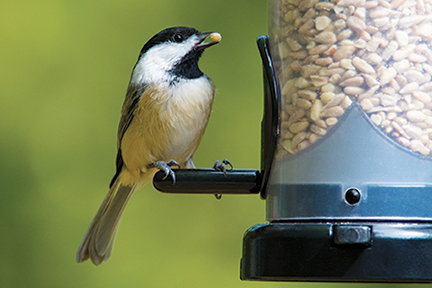
Hummingbird Feeders & Nectar in Colorado Springs
Few backyard experiences are as exciting as watching a hummingbird hover at a feeder, flash its brilliant feathers in the sunlight, or defend a favorite flower with a surprising amount of attitude.
Wild Birds Unlimited of Colorado Springs carries hummingbird feeders, nectar supplies, insulated feeder options, ant moats, cleaning tools, mounting accessories, and other products designed to help you feed hummingbirds responsibly.
Visit us at 2450 Montebello Square Drive, and our team can help you choose a feeder, find the right location, prepare safe nectar, and solve common hummingbird-feeding challenges.
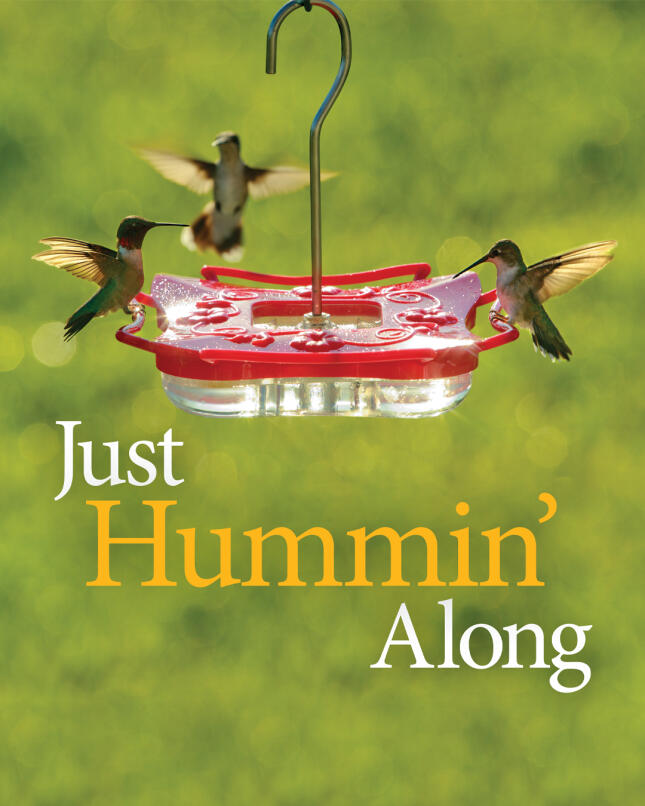
Hummingbird Feeding Questions: Quick Answers
What is the correct hummingbird nectar recipe?
Mix one part plain white granulated sugar with four parts water. Do not add red dye. The nectar should remain clear.
How often should hummingbird nectar be changed?
Never leave nectar outside for more than three days. Change it sooner during warm weather and every day when temperatures reach 90°F or above.
What is the best hummingbird feeder?
Choose a feeder that comes apart easily and allows you to reach and clean every surface that touches nectar. We especially like saucer-style feeders because they are generally easy to clean and fill, and they are less likely to leak.
Will leaving a feeder outside stop hummingbirds from migrating?
No. Hummingbirds migrate in response to natural biological and environmental signals. A properly maintained feeder can provide valuable energy for late migrants, but it will not prevent them from migrating.
Hummingbirds in Colorado Springs
Several hummingbird species may be seen in the Colorado Springs area during migration and the breeding season.
Local and migrating visitors may include:
- Broad-tailed Hummingbirds
- Black-chinned Hummingbirds
- Rufous Hummingbirds
- Calliope Hummingbirds
Which species you see will depend on your location, elevation, habitat, and the time of year. Some hummingbirds remain in an area for much of the season, while others may appear briefly as they travel between breeding and wintering grounds.
Providing flowers, insects, shelter, water, and properly maintained feeders can make your yard more welcoming to these remarkable birds.
Choosing a Hummingbird Feeder
The best hummingbird feeder is one that is easy for hummingbirds to use and easy for you to take apart, clean, and refill.
When choosing a feeder, consider:
- How easily it comes apart
- Whether every nectar-contacting surface can be reached and cleaned
- The number and shape of the feeding ports
- Whether it includes an ant moat
- How well it resists leaking
- How much nectar it holds
- Whether it can be hung or window-mounted
- How much direct sunlight the location receives
- How often you can clean and refill it
A large feeder is not always better. If only a few hummingbirds are visiting, a smaller feeder can reduce wasted nectar and make frequent changes easier.
Saucer vs Bottle-Style Hummingbird Feeders
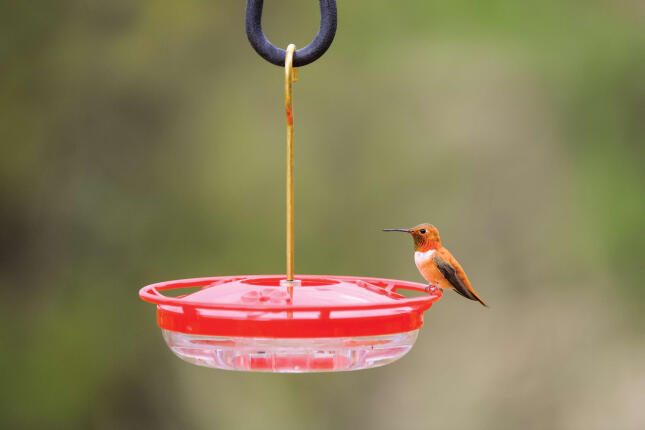
Saucer Feeders
Saucer-style feeders hold nectar in a shallow reservoir beneath the feeding ports. They are our favorites because they are often easy to fill and clean, and their design can help reduce leaking.
Many saucer feeders also provide a perch where hummingbirds can rest while drinking.
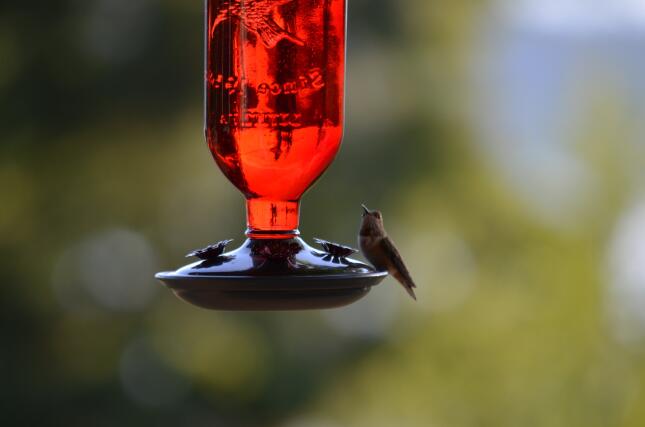
Bottle-Style Feeders
Bottle-style feeders store nectar above the feeding ports. They can hold more nectar and are available in many shapes and sizes.
Because nectar is held above the feeding ports, changes in temperature, air pressure, wind, or positioning may cause dripping. Damaged seals, incorrect assembly, and an uneven hanging position can also contribute to leaks. If a feeder begins leaking, bring it inside, clean it, inspect each part, and reassemble it according to the manufacturer’s instructions.
Neither design is automatically right for every yard. The best choice depends on your birds, location, cleaning routine, and personal preference.
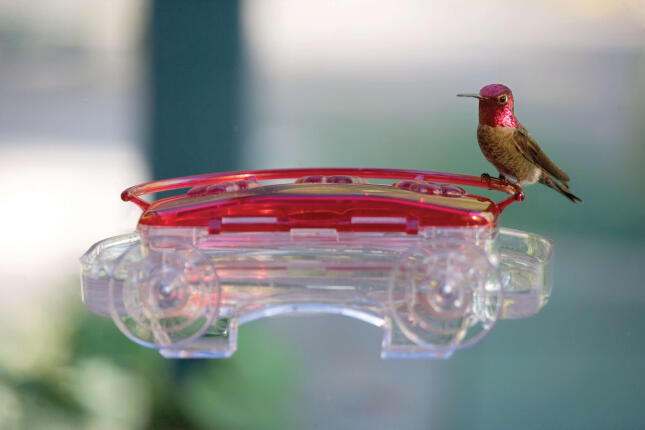
Window-Mounted Hummingbird Feeders
A window-mounted feeder can provide an exceptionally close view of visiting hummingbirds.
Make sure the feeder is securely attached and positioned where it can be safely reached for frequent cleaning. Clean the window and suction cups before installation, check the attachment regularly, and follow the manufacturer’s mounting instructions.
A feeder mounted directly on a window is close enough that a departing hummingbird cannot build up much speed before reaching the glass. Other nearby windows should still be evaluated for reflections and treated when necessary to reduce collision risk.
Where Should You Place a Hummingbird Feeder?
Place the feeder where hummingbirds can find it and where you can reach it easily for cleaning and refilling.
A good location often provides:
- Some protection from the hottest afternoon sun
- Nearby trees, shrubs, or other perches
- A clear approach to the feeding ports
- Protection from strong wind
- Distance from pesticide-treated areas
- Convenient access for daily inspection
- A location away from outdoor cats and other predators
Partial shade can help keep nectar cooler, but a feeder hidden too deeply beneath a roof or within dense foliage may be harder for passing hummingbirds to notice.
Red flowers, ribbons, or other red accents placed near a new feeder may help draw attention to the area. NEVER add red coloring to the nectar.
The Correct Hummingbird Nectar Recipe
Making safe hummingbird nectar at home is simple:
1 part plain white granulated sugar
4 parts water
For example, combine one cup of white sugar with four cups of water.
Stir until the sugar dissolves completely. Warm water can help dissolve the sugar, but boiling is not required. Allow the nectar to cool completely before filling the feeder.
The standard 1:4 recipe is similar to the sugar concentration found in many hummingbird-pollinated flowers. Adding extra sugar does not make nectar healthier, while a weaker mixture provides less energy with each visit.
Use only plain white granulated sugar and water.
What Should Never Be Added to Hummingbird Nectar?
Do not add:
- Red dye or food coloring
- Honey
- Brown sugar
- Raw sugar
- Powdered sugar
- Molasses
- Maple syrup
- Fruit juice
- Artificial sweeteners
- Flavoring
- Vitamins or supplements
These ingredients can change the nectar’s composition, introduce unwanted substances, or create health risks.
The feeder itself can use red ports, flowers, or accents to attract attention. The nectar should remain clear.
What Can Be Added to Hummingbird Nectar?
The only nectar additive we recommend is Nectar Defender, used exactly as directed. It is specifically formulated for hummingbird nectar and uses a carefully measured amount of a mineral micronutrient that hummingbirds naturally consume in flower nectar and insects. When properly mixed, it remains within the natural dietary range considered safe for hummingbirds.
Nectar Defender helps slow the growth of microorganisms that cause nectar to spoil. It contains no red dye or artificial preservatives and can be added to properly prepared nectar made with plain white sugar and water.
Always follow the label directions carefully. Do not substitute copper supplements, copper sulfate, vitamins, preservatives, or homemade additives. Nectar Defender also does not make a dirty feeder safe. Continue checking the nectar regularly and clean the feeder whenever it becomes cloudy, contaminated, or dirty.
Changing Nectar and Cleaning Your Feeder
Hummingbird nectar spoils much faster than many people realize. Never leave nectar in a feeder for more than three days, and clean the feeder every time you replace it.
When temperatures reach 90°F or above, replace the nectar and clean the feeder every day.
Change the nectar sooner if:
- It becomes cloudy
- You see floating material or mold
- Insects, droppings, or debris enter the feeder
- The feeder develops an unusual odor
- Nectar begins leaking
- The feeder receives intense sunlight
- Many hummingbirds are using it
Do not add fresh nectar to old nectar. Pour out the remaining mixture, clean the feeder, and refill it with a completely fresh batch. If hummingbirds only drink a small amount between cleanings, fill the feeder with less nectar to reduce waste.
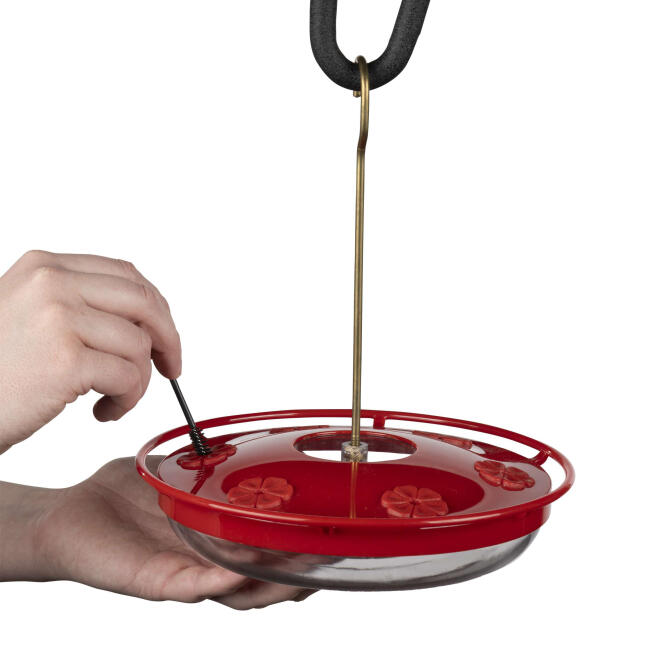
To clean your feeder:
- Empty all old nectar.
- Take the feeder apart completely.
- Scrub every surface, feeding port, and small opening.
- Rinse every part thoroughly.
- Allow the feeder to dry or refill it with fresh nectar.
Use brushes designed for feeding ports, bottle interiors, and other small spaces. Keep these tools separate from brushes used for dishes or food preparation.
If you see mold or suspect contamination, disinfect the feeder with a solution of one part bleach to ten parts water. Rinse every part extremely thoroughly and allow it to dry completely before refilling.
Replace parts that remain stained, cracked, damaged, or impossible to clean.
Want to understand why this care is so important? Read Are You Helping or Harming Hummingbirds? The Hard Truth About Feeders by our owner, Heather, on the Wild Bird Warble blog.
Our backyard bird-care guide also contains information about maintaining feeders, bird baths, and fresh bird food.
Keeping Nectar Cooler During Hot Weather
Colorado Springs can experience intense sunlight and very warm summer days. Heat can cause nectar to spoil quickly.
To help protect nectar:
- Place the feeder where it receives afternoon shade
- Use a smaller amount of nectar
- Replace nectar more frequently
- Avoid hanging the feeder beside heat-reflecting walls or metal surfaces
- Consider an insulated hummingbird feeder
- Keep a second clean feeder available for easy rotation
- Inspect the nectar every day
We carry Anna’s Healthy Hummingbird Feeder, an insulated feeder designed to help protect nectar from temperature extremes. Our team can help you decide whether an insulated feeder is appropriate for your location.
Even an insulated feeder still requires regular nectar changes and cleaning.
Why Are Hummingbirds Fighting?
Hummingbirds can be intensely territorial. Chasing does not necessarily mean the feeder is poorly placed or that you have done something wrong.
A dominant hummingbird may guard a feeder from a nearby perch and chase almost every visitor that approaches.
To serve more hummingbirds:
- Add another feeder
- Place feeders out of sight of one another
- Use different sides of the house
- Create multiple feeding areas
- Add nectar-producing flowers throughout the yard
A feeder with several ports may serve multiple hummingbirds, but one territorial bird can sometimes defend the entire feeder. Several smaller feeders placed where one bird cannot watch them all may serve more hummingbirds than one large feeder with many ports.
Flowers for Hummingbirds
Feeders are only one part of a hummingbird-friendly habitat.
Hummingbirds also benefit from flowering plants, insects, shelter, perches, and safe nesting habitat. Native and regionally appropriate flowers can provide nectar while supporting the insects hummingbirds need for protein.
Colorado-friendly hummingbird plants may include:
- Penstemons
- Agastache
- Columbines
- Salvias
- Bee balm
- Trumpet honeysuckle
- Currants
- Paintbrush
- Firecracker penstemon
- Other tubular red, orange, pink, or purple flowers
Choose plants suited to your elevation, soil, sunlight, and available water. Avoid treating hummingbird plants with pesticides that could harm birds or the insects they eat.
Hummingbirds Need More Than Nectar
Hummingbirds do not live on sugar water alone.
Nectar provides energy, but hummingbirds also eat tiny insects and spiders for protein and other nutrients. A healthy yard that supports insects is an important part of hummingbird habitat.
To support natural food:
- Grow a variety of plants
- Include native species
- Avoid unnecessary pesticide use
- Leave some natural structure in the garden
- Provide shrubs and trees
- Allow small insects to remain part of the ecosystem
Never add protein, insects, supplements, or other ingredients to hummingbird nectar.
Water for Hummingbirds
Hummingbirds drink water, but they also use water for bathing.
They may be especially attracted to:
- Fine misters
- Dripping water
- Wet leaves
- Shallow bubbling fountains
- Gently moving water
- Very shallow bird-bath edges
A deep traditional basin may not be their preferred bathing location. Keep water movement gentle and provide textured surfaces where hummingbirds can perch safely.
Visit our guide to bird baths and heated bird baths in Colorado Springs for more information.
Hummingbird Migration and When to Put Up and Take Feeders Down
Leaving a feeder outside does not stop a healthy hummingbird from migrating. Migration is driven by changing daylight, hormones, weather, food availability, and other natural signals. Hummingbirds leave when their bodies tell them it is time.
Feeders supplement the flowers and insects hummingbirds find throughout the day. Hummingbirds will not become dependent on a feeder, and temporarily removing one for cleaning or safety will not harm their ability to find natural food.
Put up feeders around mid-April for most of Colorado Springs. Continue offering fresh nectar while hummingbirds are visiting. After your regular visitors leave, keeping the feeder available for two weeks after your last sighting may help later migrants passing through. In Colorado Springs, this is often sometime in mid to late October.
Remove the feeder immediately if:
- You cannot keep the nectar fresh
- A sick bird is using it
- It is attracting a bear or raccoons
- It is leaking badly
- It has become damaged
- Local wildlife officials advise removal
The calendar is less important than proper maintenance and local wildlife conditions.
Preventing Ants
Ants are attracted to sugar water and may quickly discover a hummingbird feeder.
An ant moat creates a water barrier between the hanging point and the feeder. Some feeders include a built-in moat, while others can be paired with a separate moat.
Keep the moat filled with plain water. Never fill it with oil, pesticides, sticky substances, or chemicals that could contact birds.
Also check for dripping nectar, nearby branches touching the feeder, or alternate routes ants may be using.
Managing Bees and Wasps
Bees and wasps may investigate hummingbird feeders, particularly when flowers and other natural nectar sources are limited.
To reduce insect activity:
- Clean spilled nectar immediately
- Correct leaks
- Keep the feeder level
- Use bee-resistant feeding ports when appropriate
- Move the feeder a short distance after insects establish a pattern
- Provide native flowers for pollinators
- Avoid spraying pesticides near the feeder
- To help struggling bees you can also offer shallow dish of sugar water in a different location, but native plants are always the best option!
Never coat feeding ports with oil, petroleum jelly, or other sticky substances. These products can contaminate feathers.
Bees, wasps, and hummingbirds are all important parts of the ecosystem. The goal is to reduce competition at the feeder without harming visiting insects.
Hummingbird Feeders and Bears
Hummingbird nectar contains sugar and can attract bears.
Black bears can appear throughout much of Colorado Springs. Place hummingbird feeders with local bear activity in mind, clean spilled nectar, and never store nectar or feeders where a bear can reach them.
If a bear reaches the feeder, receives nectar, or repeatedly investigates the area, remove the feeder immediately. Bringing a feeder inside at night may reduce risk in some circumstances, but bears can also be active during the day.
Visit our guide to bird feeders and bears in Colorado Springs for detailed information about responsible feeding in bear country.
Hummingbird Feeders and Other Wildlife
Raccoons, deer, squirrels, ants, bees, and other animals may investigate a hummingbird feeder.
Thoughtful placement can reduce access. Keep feeders away from railings, fences, low roofs, and branches that mammals can use to reach them. Clean drips and spills promptly.
If mammals repeatedly empty or damage a feeder, move it, change the mounting system, or temporarily remove it while considering a more appropriate setup.
Find Hummingbird Feeders and Nectar Supplies in Colorado Springs
Visit Wild Birds Unlimited of Colorado Springs at 2450 Montebello Square Drive for hummingbird feeders, insulated feeder options, ant moats, cleaning brushes, nectar supplies, mounting accessories, and local advice.
Tell us where you plan to hang the feeder, how much sun the location receives, and about any leaking, insects, territorial behavior, or other challenges you are experiencing.
We are always happy to help you create a hummingbird-feeding routine that is safe for the birds, manageable for you, and suited to your Colorado Springs property!